
Key Takeaways
- Fatty liver disease (MASLD) affects about 1 in 3 adults, and there’s no approved drug to treat it. Diet is the actual treatment.
- Clinical trials link the biggest improvements to overall eating patterns like the Mediterranean diet, not any single “miracle” food.
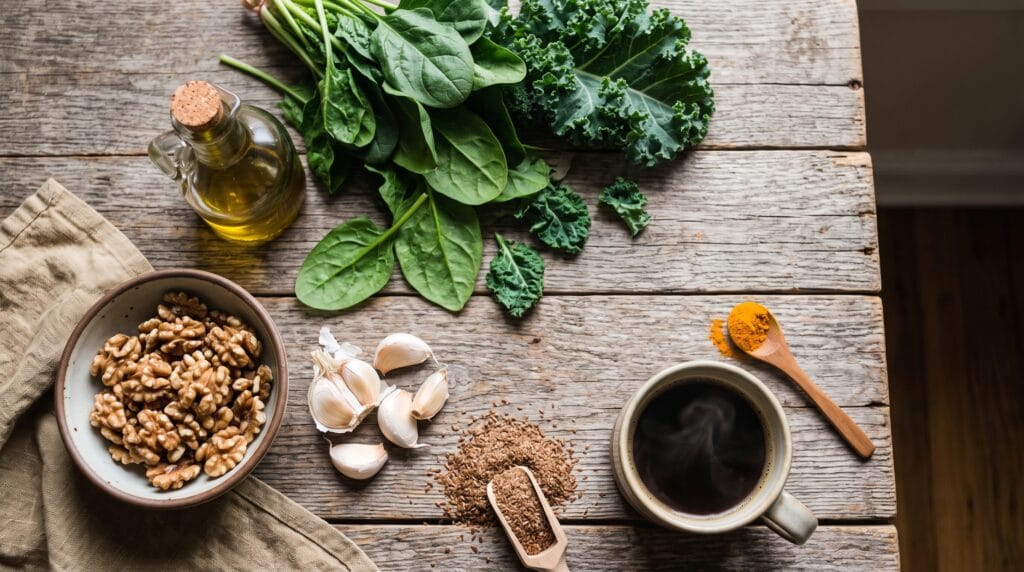
- The best-supported foods: leafy greens, extra virgin olive oil, legumes, oats and barley, flaxseed, omega-3 fish oil, coffee, garlic, turmeric, and walnuts.
- Cutting added sugar, ultra-processed foods, refined carbs, red and processed meat, and alcohol matters just as much as adding the right foods.
- Caught early, fatty liver disease is reversible with sustained diet change. Left untreated, it can progress to fibrosis and cirrhosis, which are much harder to undo.
At True Wealth Health Products, we talk a lot about how your body is built to heal itself. Your liver is a great example. If only a third of it is left, it can grow back completely. Even after years of processed food, your liver can recover on a whole-food, plant-based diet. Food really is medicine here.
Fatty liver disease, now officially called metabolic dysfunction-associated steatotic liver disease (MASLD), is the most common chronic liver disease on the planet. It affects roughly one in three adults worldwide. There’s no drug approved to treat it, and there probably won’t be one anytime soon. Every major medical guideline in Europe and the US agrees on the same first-line treatment: change your diet. Nothing else comes close.
So here’s the short version of what you need to do: EAT REAL FOOD.
Ultra-processed foods, sugary drinks, and white flour are the worst offenders. When you fill up on empty calories instead of vegetables, healthy carbs, and plant protein, your liver pays the price.
People with obesity, type 2 diabetes, insulin resistance, and high triglycerides show up with fatty liver disease constantly. These are exactly the conditions that a well-designed, whole-food, plant-based diet addresses most quickly and powerfully.
Here’s what the research actually shows about the best foods for a fatty liver, and just as important, what to stop eating.
What Causes Fatty Liver Disease?
Here’s the surprising part: fat doesn’t build up in your liver mainly because of fat in your diet. It builds up because your liver gets overwhelmed, usually by excess calories, refined carbs, and sugary drinks loaded with high-fructose corn syrup. Your liver turns those carbs into fat because fat is easier to store.
When your liver can’t clear fat fast enough, or when the rest of your body resists taking it in (a condition called insulin resistance), the fat just sits there. Once it makes up 5% or more of your liver’s weight, you have fatty liver disease.
Early on, there are no symptoms. Left alone, it can progress to MASH (an inflammatory stage), then fibrosis, cirrhosis, and even liver cancer. Catch it early, and it’s easy to reverse. Catch it late, and it’s not.
The root cause is excess calories, which drive insulin resistance, visceral fat, a disrupted gut microbiome, and chronic inflammation. Your liver has been under assault from your overall eating pattern, so one food swap or one supplement won’t turn things around by itself.
The Most Important Thing: The Overall Pattern
Before we get to the list, understand this: no single food reverses fatty liver disease. What works is a consistent eating pattern.
Dr. Marno Ryan and colleagues at St Vincent’s Hospital in Melbourne published a small but well-designed randomized, crossover trial in the Journal of Hepatology in 2013. Twelve non-diabetic adults with biopsy-confirmed NAFLD followed either a Mediterranean diet or a low-fat, high-carb control diet for six weeks, then switched. Even without weight loss, the Mediterranean diet reduced liver fat by 39%, measured with magnetic resonance spectroscopy, compared to just 7% on the control diet.
What makes the Mediterranean diet so effective for the liver is that it shares features with a whole-food, plant-based diet: plenty of vegetables, legumes, whole grains, nuts, seeds, and olive oil, with very little refined carbohydrates, processed foods, or added sugars.
The biggest results come from the biggest changes. But don’t underestimate small steps either. They build momentum, and momentum moves you forward.
Now, the list. Lean into these foods and you’ll gain ground quickly.
10 Best Foods for Fatty Liver Disease
1. Leafy Greens (Spinach, Arugula, Spring Mix, Kale, Collards)
Leafy greens may be the single most liver-protective food group you can eat. They’re loaded with nitrates and polyphenols that reduce fat buildup and oxidative stress in the liver.
A 2025 analysis of NHANES data by Liu and colleagues, published in BMC Public Health, looked at 3,162 participants to see whether vegetables in general helped with MAFLD. Only dark green leafy vegetables showed a real benefit, cutting the odds of MAFLD by about 46%. No other vegetable category came close.
A 2021 study by Li and colleagues, published in Nutrition, Metabolism and Cardiovascular Diseases, followed a large Chinese adult cohort of 26,891 people and found a roughly 28% lower risk of fatty liver disease with the highest intake of green leafy vegetables, especially among people who were normal weight or overweight (but not obese).
How to use it: Build a big salad daily with arugula, spinach, spring mix, or kale as the base. Blend dark greens into smoothies. Use collard leaves as wraps instead of tortillas. Aim for 3 cups of raw leafy greens a day.
2. Extra Virgin Olive Oil
Most people assume fatty liver means eating less fat overall. The research tells a different story: the type of fat matters far more than the amount, and extra virgin olive oil is one of the most protective fats around.
The key compounds are oleic acid, which reduces fat production in the liver, and polyphenols like oleocanthal and oleuropein, which calm the same inflammatory pathway implicated in liver disease progression. These polyphenols are what separate extra virgin olive oil from refined olive oil, and they’re why quality matters.
Dr. Priyanka Nigam and colleagues at the National Diabetes, Obesity and Cholesterol Foundation in India published a 6-month randomized trial in Diabetes Technology & Therapeutics in 2014, enrolling 93 men with NAFLD confirmed by ultrasound. Participants cooked with either olive oil, canola oil, or a common refined soybean/safflower blend, capped at 20 grams a day. Both the olive and canola oil groups (not the control group) showed significant drops in fatty liver grade: grade I prevalence fell from 73% to 23%, grade II from 20% to 10%, and grade III from about 7% to zero. Insulin resistance and triglycerides also improved.
A second randomized, double-blind trial by Dr. Shahla Rezaei and colleagues in Iran, published in Nutrition in 2019, enrolled 66 NAFLD patients on a reduced-calorie diet and assigned them to 20 grams of either olive oil or sunflower oil daily for 12 weeks. Fatty liver grade improved significantly more in the olive oil group, and body fat percentage dropped by 3.4% in that group versus a slight increase in the sunflower oil group.
A substudy of the PREDIMED trial, one of the largest Mediterranean diet trials ever run, published in the Journal of Nutrition, adds more support. At a 3-year follow-up, only 8.8% of participants supplementing a Mediterranean diet with at least 4 tablespoons of extra-virgin olive oil daily had hepatic steatosis, compared with 33% in the group only advised to cut dietary fat generally.
How to use it: Use extra virgin olive oil as your main cooking fat and salad dressing base. The research supports 2 to 4 tablespoons a day. Look for bottles labeled “extra virgin” and “cold-pressed” with a harvest date, since polyphenol content fades with age and heat. Refined or “light” olive oil won’t deliver the same benefit.
3. Legumes (Lentils, Black Beans, Chickpeas, Soybeans)
Legumes work on fatty liver through several mechanisms at once. Their soluble fiber feeds gut bacteria that produce butyrate, which helps calm liver inflammation. Their low glycemic index avoids the blood sugar spikes that drive insulin resistance. And their plant protein displaces animal protein and the saturated fat that comes with it.
A 2025 randomized controlled trial by Wu and colleagues, published in Nature Communications, enrolled 127 adults with prediabetes in Singapore and assigned them to a calorie-restricted, legume-enriched diet or a calorie-restricted control diet for 16 weeks. The legume group had significantly greater drops in LDL cholesterol, total cholesterol, and HbA1c than the control group, along with a shift toward more fiber-fermenting gut bacteria species. It’s a metabolic health trial in prediabetes rather than a fatty-liver-specific study, but the mechanism it confirms (better gut microbial fermentation of fiber, better lipid and glucose markers) is directly relevant to the metabolic dysfunction driving fatty liver.
How to use it: Aim for half to one cup of cooked legumes daily. Add lentils to soups, chickpeas to salads, black beans to grain bowls.
4. Oats and Barley (Beta-Glucan Sources)
Oats and barley are the richest grain sources of beta-glucan, a soluble fiber that forms a gel in your gut and binds up bile acids and cholesterol before they’re absorbed. That takes some of the cholesterol-processing load off a liver that’s already working overtime.
Dr. H.V.T. Ho and colleagues published a systematic review and meta-analysis in the European Journal of Clinical Nutrition in 2016, pooling 14 randomized controlled trials with 615 participants specifically testing barley β-glucan. A median dose of about 6.5 to 6.9 grams a day, taken for a median of four weeks, significantly lowered LDL and non-HDL cholesterol.
For fatty liver specifically, the connection runs through the gut. Beta-glucan, whether from oats or barley, is one of the most effective prebiotic fibers around, feeding the same butyrate-producing bacteria described in the legumes section above.
How to use it: Steel-cut oats or thick rolled oats make a solid daily breakfast base. Barley works well in soups and grain bowls.
5. Flaxseeds (and Chia Seeds)
Walnuts get a lot of attention for their omega-3 content, but flaxseeds outshine them. Flaxseeds deliver roughly 6,400 mg of ALA per tablespoon, compared to about 2,500 mg per ounce of walnuts. Chia seeds are similarly dense in ALA. Both also bring soluble fiber and lignans, giving them multiple ways to help the liver at once.
Dr. Zahra Yari and colleagues at Shahid Beheshti University of Medical Sciences in Tehran ran a randomized controlled trial, published in the International Journal of Food Sciences and Nutrition, on 50 NAFLD patients, assigning them to lifestyle modification alone or lifestyle modification plus 30 grams of brown milled flaxseed daily for 12 weeks. Liver enzymes, insulin resistance, fibrosis, and steatosis all improved in both groups, but improvements were significantly greater with flaxseed added.
A more recent 2025 trial led by Dr. Yanyan Tian and colleagues, published in Food & Function, enrolled 50 NAFLD patients and measured liver fat with MRI-based proton density fat fraction, one of the most precise non-invasive methods available. Patients took 30 grams of flaxseed powder daily before lunch or dinner for 12 weeks. That group showed significantly lower liver fat content, body fat percentage, visceral fat, AST, and total cholesterol and triglycerides, plus a rise in HDL cholesterol. The control group showed no such changes.
A third randomized, double-blind trial by Dr. Shahla Rezaei and colleagues, published in the British Journal of Nutrition in 2020, tested flaxseed oil against sunflower oil in NAFLD patients on a calorie-reduced diet. Flaxseed oil produced a modestly greater improvement in fatty liver grade and IL-6 than sunflower oil, but it didn’t replicate the stronger liver enzyme and steatosis improvements seen with whole milled flaxseed above. This lines up with a common finding in nutrition research: the whole food, with its intact fiber and full range of compounds, tends to outperform the extracted oil.
How to use it: One to two tablespoons of ground flaxseed daily, mixed into oatmeal, smoothies, or salads, is a practical starting dose. The clinical trials used 30 grams a day for the full effect. Flaxseed needs to be ground, not whole, for the ALA and lignans to actually get absorbed. Chia seeds are a good second option with a similar ALA and fiber profile, and they can go into smoothies or overnight oats whole.
6. Fatty Fish and Fish Oil (Omega-3 Fats)
Most people eating a plant-based diet skip fatty fish, and for good reason: heavy metals, PCBs, and other pollutants show up in a lot of fish. Still, the evidence for EPA and DHA in fatty liver disease is strong enough to mention directly, and a purified fish oil supplement is the cleanest way to get these fats without the contamination risk.
EPA and DHA work through pathways plant-based ALA can’t fully replicate. They suppress the liver’s own fat production, reduce triglyceride synthesis, and improve insulin signaling in liver tissue.
The most rigorous trial here is the WELCOME study, run by Dr. Eleonora Scorletti, Dr. Philip Calder, and Dr. Christopher Byrne and colleagues, published in Hepatology in 2014. One hundred three NAFLD patients took either 4 grams daily of purified DHA plus EPA or a placebo for 15 to 18 months in a double-blind design. The main analysis showed a trend toward less liver fat that didn’t reach statistical significance, partly because adherence varied and some placebo-group participants had contamination. But in a secondary analysis, every 1% increase in DHA tissue enrichment was linked to a 1.70% decrease in liver fat.
A second trial by Dr. Lihua Song and colleagues, published in the British Journal of Nutrition in 2020, tested fish oil (450 mg EPA plus 1,500 mg DHA daily) against placebo and phytosterol supplementation in 96 NAFLD patients. Liver fat improvement trended favorably but didn’t reach significance. What did reach significance was a drop in TGF-beta and TNF-alpha, both key drivers of liver inflammation and fibrosis. That matters because fibrosis, not fat alone, is what eventually threatens the liver.
The honest summary: fish oil reliably lowers triglycerides and inflammation, with a consistent signal toward less liver fat, even when individual trials don’t always reach statistical significance. Results vary with dose, duration, and how well someone’s tissues actually take up the DHA.
How to use it: Aim for a purified fish oil supplement providing 2 to 3 grams of combined EPA and DHA daily. For strict vegans, algae-based DHA is an option, though most algae oils run lower in EPA.
7. Coffee
Long before modern research took an interest, some alternative medicine traditions treated coffee as a liver remedy. Modern population studies have caught up with what those older observations pointed toward.
To be clear, there are no randomized controlled trials testing whether coffee directly reduces liver fat in NAFLD patients. What exists is observational data, but it’s remarkably consistent across large populations.
Dr. Constance Ruhl and Dr. James Everhart’s landmark analysis of NHANES III data, published in Gastroenterology in 2005, looked at 5,944 adults at high risk for liver injury. People drinking more than 2 cups of coffee a day had 44% lower odds of elevated ALT, the primary blood marker of liver cell stress. The pattern held across every high-risk subgroup.
A 2021 systematic review and meta-analysis by Dr. Maryam Ebadi and colleagues, published in Nutrients, pooled 11 studies and found that coffee drinkers with NAFLD had 35% lower odds of significant liver fibrosis than non-drinkers.
The active compounds appear to be chlorogenic acids and diterpenes rather than caffeine itself, since decaf shows similar benefits in observational studies.
How to use it: Two to three cups of filtered coffee a day is the range tied to liver benefit in the population data. Filtered coffee is better than unfiltered (like French press), which raises LDL through diterpenes. Decaf appears to keep the liver benefit for people sensitive to caffeine.
8. Garlic
Garlic’s liver benefits come from sulfur compounds like allicin and S-allyl cysteine, which activate the liver’s own antioxidant defenses and calm inflammatory signaling.
Dr. Abbas Ali Sangouni and colleagues at Urmia University of Medical Sciences in Iran published a double-blind, randomized, placebo-controlled trial in the British Journal of Nutrition in 2020. Ninety NAFLD patients took 1,600 mg of garlic powder daily or a placebo for 12 weeks. Hepatic steatosis on ultrasound dropped significantly in the garlic group, along with significant drops in ALT, AST, gamma-glutamyltransferase, total cholesterol, triglycerides, and LDL.
How to use it: Fresh garlic is the strongest whole-food source. Two to four cloves a day, minced raw into dressings or added near the end of cooking to preserve the allicin, is a realistic daily target.
9. Turmeric and Curcumin
Curcumin, turmeric’s active compound, is one of the most studied natural anti-inflammatories for liver disease, and the clinical evidence here is stronger than for most foods on this list.
Dr. Yunes Panahi and colleagues at Baqiyatallah University of Medical Sciences in Tehran published a benchmark trial in Drug Research in 2017. They randomized 102 NAFLD patients (50 to curcumin, 52 to placebo) to 1,000 mg of phytosomal curcumin daily or placebo for 8 weeks; 87 patients completed the trial. Ultrasound findings improved in 75% of the curcumin group versus 4.7% of the placebo group, and both AST and ALT dropped significantly in the curcumin group while rising in the placebo group.
A more recent and rigorous trial by Dr. Youming He and colleagues at Sun Yat-sen University, published in the American Journal of Clinical Nutrition in 2024, followed 80 patients for 24 weeks on 500 mg of curcumin daily, the longest curcumin NAFLD trial to date. Liver fat, measured by controlled attenuation parameter imaging, dropped significantly compared to placebo, along with triglycerides, fasting glucose, HbA1c, and insulin. The study also found favorable shifts in gut bacteria, suggesting curcumin partly works through improving bile acid metabolism.
One catch: standard curcumin powder absorbs poorly on its own. The trials above used phytosomal or bioavailability-enhanced forms specifically because plain curcumin doesn’t reach effective blood levels.
How to use it: Add turmeric generously to curries, soups, and roasted vegetables, always paired with black pepper, which significantly boosts curcumin absorption through piperine. If you’re aiming for the doses used in these trials, a bioavailability-enhanced supplement will get you there more reliably than food alone.
10. Walnuts
Walnuts combine three liver-relevant compounds in one food: ALA omega-3 fat, ellagitannin polyphenols, and arginine, an amino acid that supports blood flow independently of the nitrate pathway in leafy greens.
The strongest trial data comes from the DIRECT PLUS trial, run by Dr. Anat Yaskolka Meir, Dr. Iris Shai, and colleagues at Ben-Gurion University of the Negev, published in Gut in 2021. This 18-month trial enrolled 294 adults with abdominal obesity and assigned them to a healthy dietary guidelines group, a Mediterranean diet group, or a green-Mediterranean diet group, with both Mediterranean groups including 28 grams of walnuts daily. Liver fat was measured with proton magnetic resonance spectroscopy.
After 18 months, the standard Mediterranean diet group with walnuts cut liver fat by 19.6%, compared to 12.2% in the healthy guidelines group. The green-Mediterranean group, which also added daily green tea and a duckweed-based green shake, went further still, cutting liver fat by 38.9%. Greater walnut intake specifically was independently linked to greater liver fat loss across the study.
How to use it: 28 grams, about 14 walnut halves, is the dose used in DIRECT PLUS. Raw walnuts beat roasted, since heat can oxidize the ALA. Add them to salads, oatmeal, or eat them as a snack.
What to Stop Eating
We’ve covered what to add. Now look hard at this list and start cutting it out.
Added sugars and fructose. High-fructose corn syrup and added sugars drive the liver to make fat directly from sugar. Sugary drinks are the worst offenders here. This is priority one.
Ultra-processed foods. Anything with more than five ingredients loaded with refined oils, added sugars, emulsifiers, and artificial additives. This category is the single strongest dietary predictor of fatty liver disease in large population studies. Priority two.
Refined carbohydrates. White bread, white rice, pasta, crackers, pastries. These spike blood sugar and insulin, telling your liver to make and store more fat.
Red and processed meat. High saturated fat intake is directly tied to worse liver steatosis. Processed meats also add nitrites and compounds that increase liver inflammation.
Alcohol. Even moderate drinking speeds up liver inflammation and fibrosis in people who already have fatty liver disease.
Want the quick version of everything above? Download our free infographic, 10 Best Foods for a Healthy Liver, a one-page snapshot of the studies, the numbers, and how to start eating for your liver this week.
Frequently Asked Questions
Can a fatty liver ever go back to normal?
Yes, especially if you catch it early. In a randomized trial, adults with biopsy-confirmed fatty liver disease cut their liver fat by 39% after just six weeks on a Mediterranean-style diet, without losing weight. Fibrosis and cirrhosis, the later stages, are much harder to reverse, which is why acting on the early, symptom-free stage matters so much.
What’s the best drink for liver repair?
Filtered coffee has the strongest evidence of any beverage. People who drink more than 2 cups a day show significantly lower odds of elevated liver enzymes, and coffee drinkers with fatty liver disease show notably lower odds of significant scarring. Two to three cups of filtered coffee daily is the range tied to benefit in the research. Decaf appears to carry the same benefit for people who are caffeine-sensitive.
What’s the number one food that causes fatty liver?
Added sugar, particularly from sugar-sweetened beverages and high-fructose corn syrup. Your liver converts excess fructose into fat directly, which is why sugary drinks are considered the single biggest dietary driver of fatty liver disease.
What foods should I avoid with fatty liver?
The biggest ones to cut are added sugars and sugary drinks, ultra-processed foods, refined carbohydrates like white bread and pastries, red and processed meat, and alcohol. Ultra-processed food as a category is the strongest single dietary predictor of fatty liver disease in large population studies.
What are good snacks for a fatty liver?
A small handful of raw walnuts (about 28 grams) is one of the better-studied snack options, with clinical trial data showing it helps shrink liver fat as part of a Mediterranean-style diet. Ground flaxseed stirred into yogurt or a smoothie, or a piece of fruit with a handful of nuts, are also solid choices that avoid the added sugar and refined carbs that work against liver health.
There’s No Pill for This
There’s no approved drug for fatty liver disease, and there probably never will be. Every major medical guideline agrees that diet is the treatment, not a stopgap while you wait for something better to come along.
That’s actually good news. It means the intervention that reverses fatty liver disease is fully in your hands, starting with your next meal. A diet built around leafy greens, extra-virgin olive oil, legumes, oats and barley, flaxseed, omega-3s, coffee, garlic, turmeric, and walnuts, with the added sugar, processed food, and alcohol stripped out, is exactly the pattern the research above points to.
If you’ve been diagnosed with fatty liver disease, or you suspect you have it because of elevated triglycerides, high fasting insulin, or extra weight around your middle, the roadmap above is where to start.
Want to know where you actually stand? A metabolic lab panel can show you fasting insulin, liver enzymes like GGT and ALT, your full lipid profile, and other markers tied directly to fatty liver risk, not just guesswork based on symptoms you can’t feel yet. If you’d rather not figure this out alone, our health coaching pairs that lab data with a plan built around your numbers, not a generic diet sheet. Check out our coaching at True Wealth Health Products to get started.
References
- Ryan MC, Itsiopoulos C, Thodis T, et al. The Mediterranean diet improves hepatic steatosis and insulin sensitivity in individuals with non-alcoholic fatty liver disease. Journal of Hepatology. 2013;59(1):138-143. https://doi.org/10.1016/j.jhep.2013.02.012
- Liu C, Liu Y, Liu J, et al. Associations between intake of different types of vegetables and metabolic dysfunction-associated fatty liver disease: a population-based study. BMC Public Health. 2025;25(1):315. https://doi.org/10.1186/s12889-025-21331-4
- Li H, Wang X, Ye M, et al. Does a high intake of green leafy vegetables protect from NAFLD? Evidence from a large population study. Nutrition, Metabolism and Cardiovascular Diseases. 2021;31(6):1691-1701. https://doi.org/10.1016/j.numecd.2021.01.009
- Nigam P, Bhatt S, Misra A, et al. Effect of a 6-month intervention with cooking oils containing a high concentration of monounsaturated fatty acids (olive and canola oils) compared with control oil in male Asian Indians with nonalcoholic fatty liver disease. Diabetes Technology & Therapeutics. 2014;16(4):255-261. https://doi.org/10.1089/dia.2013.0178
- Rezaei S, Akhlaghi M, Sasani MR, Barati Boldaji R. Olive oil lessened fatty liver severity independent of cardiometabolic correction in patients with non-alcoholic fatty liver disease: a randomized clinical trial. Nutrition. 2019;57:154-161. https://doi.org/10.1016/j.nut.2018.02.021
- Pintó X, Fanlo-Maresma M, Corbella E, et al.; PREDIMED Study Investigators. A Mediterranean diet rich in extra-virgin olive oil is associated with a reduced prevalence of nonalcoholic fatty liver disease in older individuals at high cardiovascular risk. Journal of Nutrition. 2019;149(11):1920-1929. https://doi.org/10.1093/jn/nxz147
- Wu X, Tjahyo AS, Volchanskaya VSB, et al. A legume-enriched diet improves metabolic health in prediabetes mediated through gut microbiome: a randomized controlled trial. Nature Communications. 2025;16(1):942. https://doi.org/10.1038/s41467-025-56084-6
- Ho HVT, Sievenpiper JL, Zurbau A, et al. A systematic review and meta-analysis of randomized controlled trials of the effect of barley β-glucan on LDL-C, non-HDL-C and apoB for cardiovascular disease risk reduction. European Journal of Clinical Nutrition. 2016;70(11):1239-1245. https://doi.org/10.1038/ejcn.2016.89
- Yari Z, Rahimlou M, Eslamparast T, et al. Flaxseed supplementation in non-alcoholic fatty liver disease: a pilot randomized, open labeled, controlled study. International Journal of Food Sciences and Nutrition. 2016;67(4):461-469. https://doi.org/10.3109/09637486.2016.1161011
- Tian Y, Zhou Y, Liao W, et al. Flaxseed powder supplementation in non-alcoholic fatty liver disease: a randomized controlled clinical trial. Food & Function. 2025;16(4):1389-1406. https://doi.org/10.1039/d4fo05847j
- Rezaei S, Sasani MR, Akhlaghi M, Kohanmoo A. Flaxseed oil in the context of a weight loss programme ameliorates fatty liver grade in patients with non-alcoholic fatty liver disease: a randomised double-blind controlled trial. British Journal of Nutrition. 2020;123(9):994-1002. https://doi.org/10.1017/S0007114520000318
- Scorletti E, Bhatia L, McCormick KG, et al. Effects of purified eicosapentaenoic and docosahexaenoic acids in nonalcoholic fatty liver disease: results from the WELCOME study. Hepatology. 2014;60(4):1211-1221. https://doi.org/10.1002/hep.27289
- Song L, Zhao XG, Ouyang PL, et al. Combined effect of n-3 fatty acids and phytosterol esters on alleviating hepatic steatosis in non-alcoholic fatty liver disease subjects: a double-blind placebo-controlled clinical trial. British Journal of Nutrition. 2020;123(10):1148-1158. https://doi.org/10.1017/S0007114520000495
- Ruhl CE, Everhart JE. Coffee and caffeine consumption reduce the risk of elevated serum alanine aminotransferase activity in the United States. Gastroenterology. 2005;128(1):24-32. https://doi.org/10.1053/j.gastro.2004.09.075
- Ebadi M, Ip S, Bhanji RA, Montano-Loza AJ. Effect of coffee consumption on non-alcoholic fatty liver disease incidence, prevalence and risk of significant liver fibrosis: systematic review with meta-analysis of observational studies. Nutrients. 2021;13(9):3042. https://doi.org/10.3390/nu13093042
- Sangouni AA, Mohammad Hosseini Azar MR, Alizadeh M. Effect of garlic powder supplementation on hepatic steatosis, liver enzymes and lipid profile in patients with non-alcoholic fatty liver disease: a double-blind randomised controlled clinical trial. British Journal of Nutrition. 2020;124(4):450-456. https://doi.org/10.1017/S0007114520001403
- Panahi Y, Kianpour P, Mohtashami R, et al. Efficacy and safety of phytosomal curcumin in non-alcoholic fatty liver disease: a randomized controlled trial. Drug Research. 2017;67(4):244-251. https://doi.org/10.1055/s-0043-100019
- He Y, Chen X, Li Y, et al. Curcumin supplementation alleviates hepatic fat content associated with modulation of gut microbiota-dependent bile acid metabolism in patients with nonalcoholic simple fatty liver disease: a randomized controlled trial. American Journal of Clinical Nutrition. 2024;120(1):66-79. https://doi.org/10.1016/j.ajcnut.2024.05.017
- Yaskolka Meir A, Rinott E, Tsaban G, et al. Effect of green-Mediterranean diet on intrahepatic fat: the DIRECT PLUS randomised controlled trial. Gut. 2021;70(11):2085-2095. https://doi.org/10.1136/gutjnl-2020-323106